
Criminal Cases in the Parker County Courts
Parker County divides criminal court cases by offense level and filing court. The District Clerk keeps felony files assigned to the 43rd and 415th District Courts. The County Clerk court divisions maintain misdemeanor files for County Courts at Law Nos. 1 and 2. A fine-only Class C charge, traffic matter, or city-ordinance case generally stays with the issuing municipal or justice court. This split matters because a no-result search in one division says nothing about a file held by another.
The cause number is the best key. It identifies a particular Parker County case more safely than a name alone and helps a clerk locate filings, orders, and a judgment. Court files center on allegations formally accepted for prosecution. They are different from the arrest report and jail booking entry that may have come first. Readers following the event from arrest to final result can use the broader Parker County criminal history overview to keep those systems separate.
Parker County Felony Case Files
The District Clerk is the custodian for felony criminal case records in Parker County. The 43rd District Court can be reached at 817-594-7343, and the 415th District Court at 817-598-6162. Those court lines help with routing, but the clerk remains the source for the filed case index, available document copies, and certification. A prosecutor's office may explain its own filing, yet it is not a substitute for the clerk's official docket or judgment.
The official Parker County District Clerk information shows the office that holds felony case records.

This source view helps a searcher confirm the correct office before asking for a Parker County felony docket, filed pleading, judgment, or certified copy.
How to Search Case Records
Begin at the official Parker County Courts hub and follow its Judicial Record Search link. Search by exact cause number when it is known. Otherwise use the legal name and narrow the results with first name, date range, court, case type, or status controls that appear in the live vendor screen. Portal labels can change, and automated access sometimes receives an error, so the clerk counter and phone route remain important fallbacks.
- Choose the case-record route rather than the jail-record route.
- Enter the cause number, or start with the last name and add a first name.
- Narrow the Parker County result set by court, filing period, record type, or status when those controls appear.
- Open the case detail and compare the court, filed charge, count, docket events, and disposition.
- Ask the District Clerk for felony documents or the County Clerk for misdemeanor documents that are absent online or need certification.
| Field or Control | Type | Required | Use |
|---|---|---|---|
| Search type | Tab or menu | Yes | Select case records rather than jail records. |
| Name or last name | Text | Route-dependent | Start with the legal surname used in the filing. |
| First name | Text | Optional | Narrows a common surname. |
| Case number | Text | Optional | Best unique court key when known. |
| Date range | Date controls | Optional | Limits filing or event dates, depending on the module. |
| Court | Menu | Optional | Separates district and county court results. |
| Record type or status | Menu | Optional | Availability depends on the current vendor view. |
Note: A portal result is an index entry; obtain the filed paper or electronic image when the exact text controls the question.
Parker County Misdemeanor Court Records
County Courts at Law Nos. 1 and 2 hear Parker County misdemeanors, not ordinary felony cases. County Clerk Court Division 1 is listed at 817-598-6138, and Court Division 2 at 817-598-6055. Court numbers and clerk-division numbers serve different roles, so name the court and cause number when asking where a file sits. The main courthouse at 1 Courthouse Square in Weatherford is the practical starting point for county-court matters.
The official County Court at Law 2 description says later filings go through first-floor County Clerk intake.
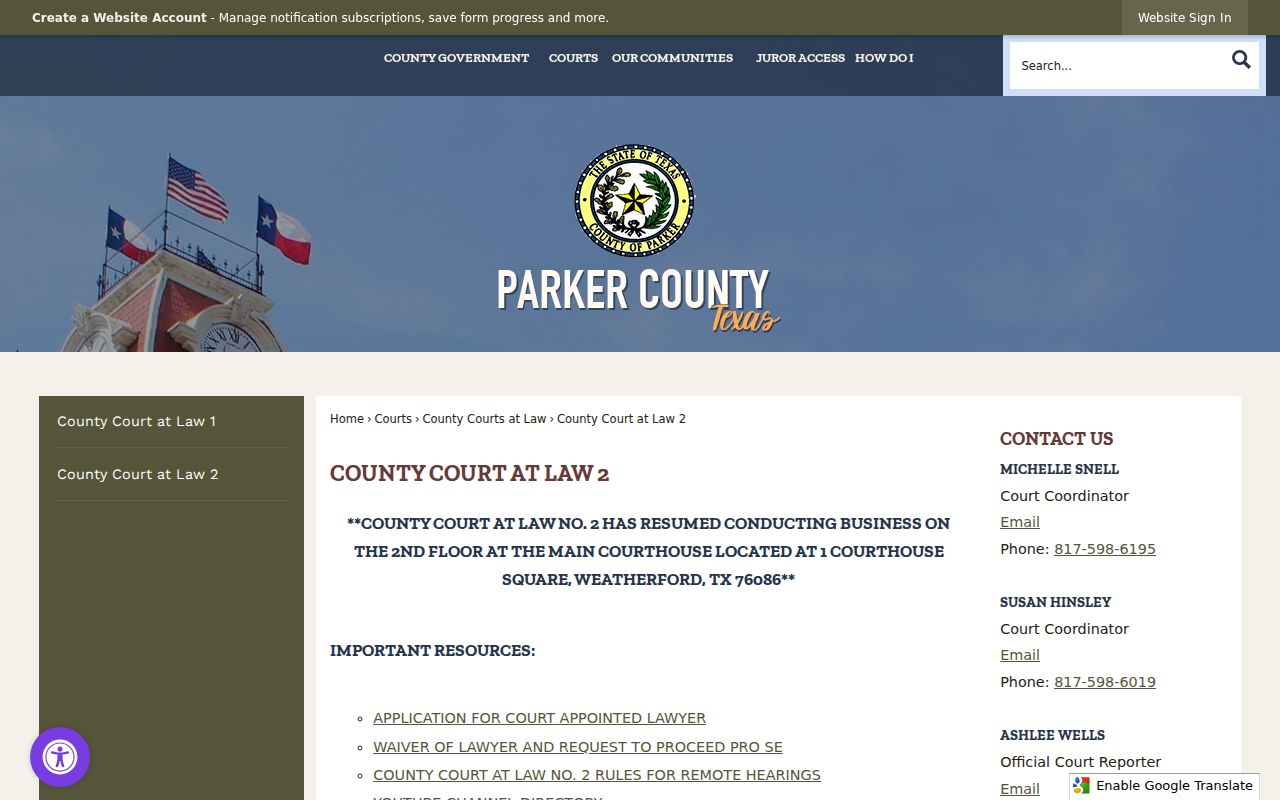
The image reinforces a key access point: the court conducts the case, while the County Clerk receives and preserves the Parker County misdemeanor filing.
What the Case File Shows
A Parker County criminal case file is organized around a cause number and formal court events. It can show the filed charge, its Texas statute and degree or class, counsel, settings, motions, a plea, orders, judgment, and sentence. Each count must be read on its own. One count may be dismissed while another ends in conviction or deferred adjudication. A booking allegation can also differ from the charge later accepted by the prosecutor.
| Header | Cause number, court, case type, filing date, status, and judge when public. |
|---|---|
| Parties | State of Texas, displayed defendant name, and counsel of record. |
| Charges | Filed description, statute, degree or class, count, and disposition. |
| Docket Events | Charging paper, warrant or capias, settings, plea, motions, judgment, sentence, and appeal events. |
| Bond and Hearings | Public amount, type, status, hearing date, time, and type when supplied. |
| Financial Record | Fine, court costs, payments, or balance when the portal exposes them. |
| Documents | Filing title and date; the image may require a clerk request or purchase. |
Dates of birth, Social Security numbers, victim data, and other protected details may be hidden or redacted. Their absence does not make the rest of the docket incomplete.
Counsel in Parker County Criminal Cases
Parker County does not operate a standalone public defender office. Courts instead appoint qualified private counsel after reviewing an indigency application. The application asks for financial and household facts under declaration, and the judge decides whether the applicant qualifies. The lawyer's name may then appear in the case file, but the private discussion between counsel and client does not become a public docket record.
The county's approved appointment information identifies the Parker County process and participating attorneys.
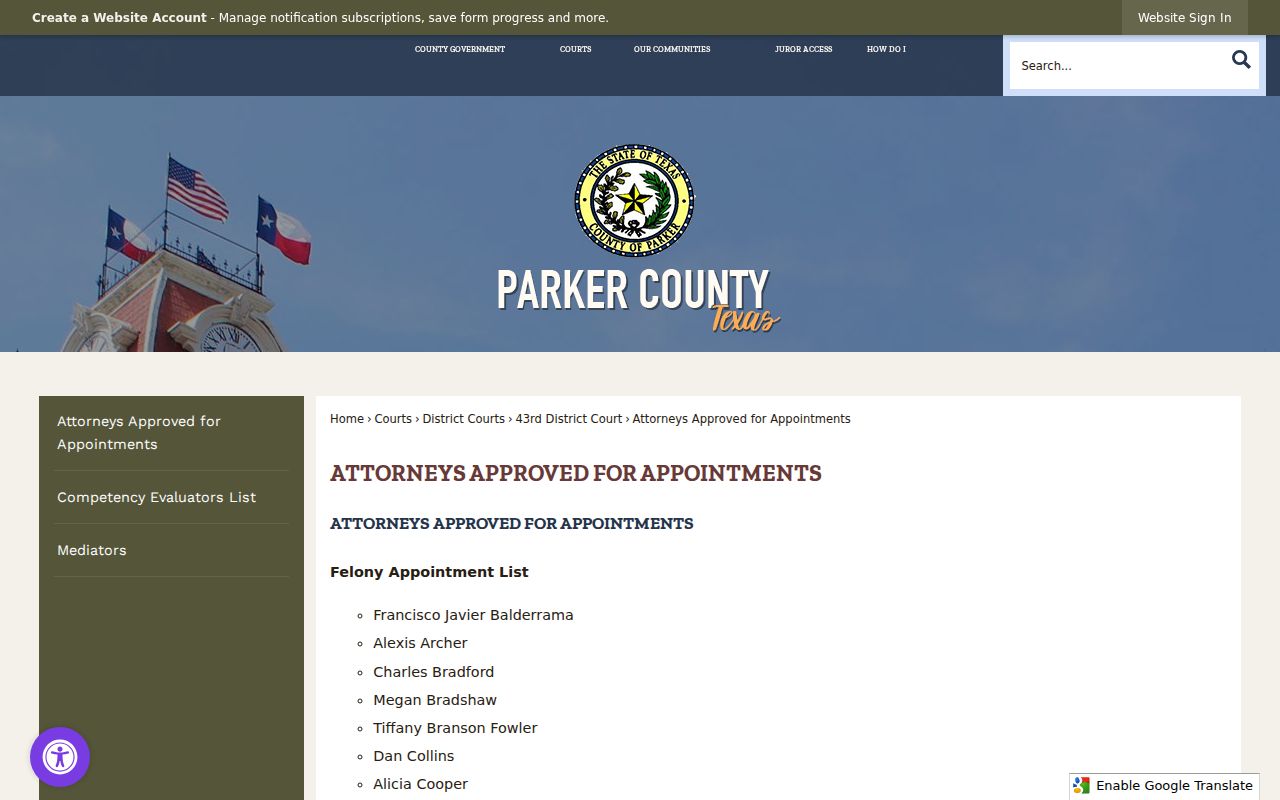
This official view distinguishes a court appointment from a separate government defender agency and helps explain how counsel appears on a Parker County docket.
Stages of a Criminal Case
A filed case does not jump from arrest to sentence. After custody, Texas law requires prompt magistration without needless delay, generally no later than 48 hours. The magistrate gives warnings and addresses probable cause and bond. The prosecutor then decides what allegation to file. A misdemeanor commonly proceeds by information. A felony normally requires a grand-jury indictment unless a valid exception or waiver applies.
Case flow: Charges Filed › Arraignment › Pretrial › Plea or Trial › Disposition › Sentencing
Pretrial settings can add motions, discovery events, negotiations, and court orders to the Parker County docket. Not all discovery is publicly imaged. The disposition may be conviction, deferred adjudication, dismissal, acquittal, or another termination. Sentencing terms belong in the judgment and related orders, not in the booking line that listed the first allegation.
Parker Criminal Case Results at DPS
Parker County clerks and courts provide disposition data that becomes part of the Texas Computerized Criminal History cycle under Code of Criminal Procedure Chapter 66. The arresting agency first supplies the fingerprint-linked arrest event. Prosecutors and courts later add their decisions. That chain explains why a DPS record may lag behind a fresh Parker County docket or show a reported Texas outcome without providing the court's motions and document images.
The Texas Department of Public Safety gives an official explanation of criminal history reporting by the agencies in that cycle.
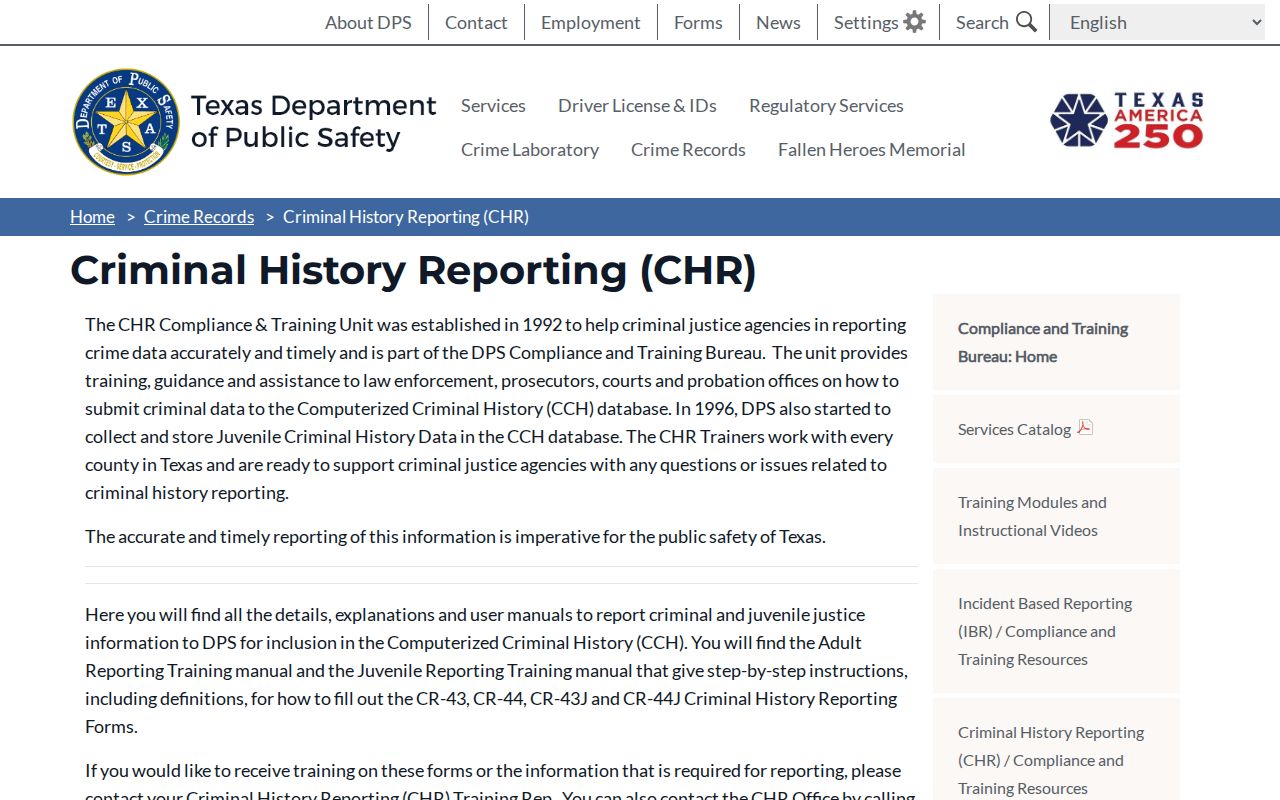
This reporting view connects the local judgment to the state repository without treating the public DPS product as a duplicate of the Parker County court file.
re:SearchTX and Parker County Cases
re:SearchTX is the statewide electronic court platform. Its interface can search Cases, Filings, Text, or Hearings, apply advanced filters, open case or hearing details, export results, and save a search. Registration uses eFileTexas credentials. Support is available at 844-307-8720 and research.support@tylertech.com. These features make it useful when the likely court is unclear or a reader is tracking matters across Texas.
Coverage and document access depend on court participation and integration. A missing Parker County case does not prove that no filing exists. Confirm the court and date range, then contact the District Clerk or County Clerk. The local cause number, docket, and certified judgment remain the stronger sources for a case-specific conclusion.
- Cause number
- The court's unique identifier for one case.
- Docket
- The ordered register of filings, hearings, rulings, and case events.
- Disposition
- The outcome or current result of a charge, such as dismissal, conviction, or deferred adjudication.
- Judgment
- The signed court record that states the adjudication and sentence.
Access & Restrictions
Public court dockets and clerk copies are generally available without a requester proving a purpose. The request must go to the custodian that keeps the record. The Texas Public Information Act supports access to public information, but it does not force Parker County to create a new report or answer a research question. Court-record access also rests on judicial rules and the clerk's custody of the file.
Juvenile justice information is restricted under Family Code Section 58.008. Sealed, expunged, or nondisclosed data may not appear in a public search. Victim identifiers, Social Security numbers, and other private details can be removed. If a public case image is absent, give the responsible clerk the cause number, court, party name, and document title or filing date. Ask whether inspection, an ordinary copy, or a certified copy is available.
Access rules: Government Code Chapter 411 limits criminal-history dissemination; Code of Criminal Procedure Chapter 66 governs reporting; and Chapter 552 governs public-information requests.
Note: An online no-hit can reflect the wrong court, a spelling issue, restricted access, delayed filing, or incomplete portal coverage.